
Installed Lithium-ion Batteries and Systems
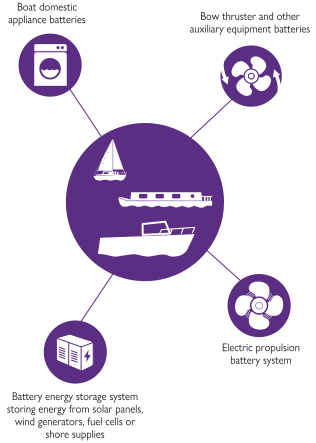
Fire Safety for installed lithium-ion batteries
Along with the many benefits of installing lithium-ion batteries in boats, the risks associated with such batteries failing must be managed so boaters can enjoy their safe use.
When they are installed properly, charged appropriately and have a robust and reliable battery management system (BMS), lithium-ion batteries, which includes lithium-ion phosphate (LiFePO4 /LFP), can be operated safely with a low likelihood of problems.
However, failing to follow any one of these three basic rules, may see the risks increasing. Don’t risk your boat or even your life.

Install and test smoke alarms
Fit suitable, certified smoke alarms and carbon monoxide alarms. Ensure they can be heard throughout the boat. Test alarms monthly. Failing lithium-ion batteries can produce carbon monoxide
and can lead to serious fires.
Create a safe-escape plan
Everyone aboard must know and understand how to act in case of an emergency. Never block your planned exit and emergency escape routes.
If you’re thinking of switching your domestic or energy storage batteries to lithium-ion, here’s some tips.
The following advice is based upon guidance provided by industry experts.
Use a professional who installs to suitable industry standards
The installation of lithium-ion batteries and battery systems should only be carried out by a competent installer, and to suitable industry standards (ie. ISO 23625).
Install marine-suitable equipment
Only lithium-ion batteries and battery system components declared suitable for the intended marine use by the manufacturer or supplier should be used. They are designed for use in the challenging marine environment.
A competent installer should only use lithium-ion batteries meeting the IEC 62619 and IEC 62620 standards. Certified batteries are designed to withstand critical risks (e.g. overcharging, over-discharge, short circuit, mechanical and thermal abuse).
Mixing and matching battery types is risky – don’t do it
Different battery types should not be connected in parallel or in series. The load characteristics and capabilities of lithium-ion batteries and lead-acid batteries, for example, are drastically different.
Tell your insurer.
If you have lithium-ion batteries and/or battery systems on your boat, you must tell your insurer, or risk being left uninsured in the event of an incident.

Follow manufacturer’s instructions
Your competent installer must follow manufacturer’s installation instructions for lithium-ion battery system products, for example concerning the suitability and type of Battery Management Systems and charge regulation equipment.
Any specifications for the securing of the battery, temperature control, venting, ‘off-gas’ detection and appropriate fire containment must be met.
Always use lithium-ion batteries in line with the manufacturer’s instructions and ensure the batteries are kept within the manufacturer’s stated safe operating limits, e.g. keeping batteries within any specified ranges for temperature, rate of charging or ‘state of charge’.
Stay safe when charging lithium-ion batteries
Each installation needs a well-matched and robust Battery Management System and charge regulation equipment.
Robust Battery Management Systems will protect batteries from overcharging, overdischarging,
and high and low temperature.
They should be external to the batteries (or if internal, the means of control should be separate) and have a visual and audible activation alarm.
Only the manufacturer’s approved charging devices and equipment should be used.
Unless the equipment instructions and/or competent installer state that it is safe to do so, do not leave equipment on charge when you are asleep or away from the boat.
Keeping safe
Routinely check on battery condition
Always keep an eye on their condition. The following are indicators that the battery may be about to release extremely harmful emissions, explode or cause a very significant fire. Take action if you see any of these indicators.
If any of these indicators are present, isolate the battery and charger, (e.g. switch off the battery switch or unplug the charger plug).
Seek immediate help from the supplier or specialist contractor to dispose of the battery as soon as possible.

Bulging/Leaking:
Bulging batteries, odd lumps, or leaking liquid, vapour or gas.

Excessive Heat:
Batteries that feel extremely hot to touch.

Battery management system trips:
A trip or alarm activation indicates a significant battery fault.
Dispose of damaged batteries safely
Never dispose of damaged or end-of-life batteries in household waste, or overboard.
Follow local authority guidance on safe disposal or if you are on the move, visit the
Recycle Your Electricals website to find out about local battery recycling facilities.

If a lithium-ion battery fails act immediately
Lithium-ion battery failure can trigger a sudden and violent process called ‘thermal runaway’. This is when harmful toxic and explosive gases/vapour are rapidly produced that, if inhaled, could cause immediate collapse and which can result in a fire and/or a ferocious explosion. Anyone nearby could be at significant risk.
Lithium-ion battery fires can spread fast and produce dense smoke, toxic gases or vapour that can make it difficult to escape. Unlike other fires, they can continue to develop and can easily re-ignite once extinguished.
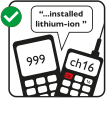
If a battery starts making loud popping, hissing or screaming sounds, or emits toxic gasses/vapour or smoke, or catches fire, raise the alarm, warn others, get out, stay out and keep well clear of the boat. Call 999/Ch16 for help immediately.
Gases/vapours or smoke could be lethally toxic, so do not enter a smoke-filled space, you may not escape.
Unless there’s no other route, stay away from the battery when making your escape and try not to breathe in any toxic gases/vapour or smoke.
Do not touch or try to move any battery making loud sounds, or emitting gases/vapour or smoke, or that is already on fire.
Never attempt to fight a lithium-ion battery fire. These fires present an immediate danger and can escalate rapidly. Get out, stay out call 999/Ch16.
When reporting a fire involving a lithium-ion battery or batteries, specify the type and number if possible. For example, two installed lithium-ion LiFePO4 12V/105Ah batteries.
Take control. Stay safe.
To operate installed lithium-ion batteries with a low likelihood of safety issues:
- Never DIY - only use a professional who installs marine-suitable equipment to the manufacturer’s instructions and to industry standards (i.e. ISO 23625).
- Insist on certified batteries meeting the IEC 62619
and IEC 62620 standards. - Insist on a well-matched and robust Battery Management System and charge regulation equipment.
- Always use lithium-ion batteries in line with the manufacturer’s instructions to keep them within safe operating limits.
- Never mix and match lithium-ion with other battery types by connecting them in parallel or in series.
- Do not use batteries, charging equipment, or connected cables that show any signs of damage or problems.